For precision tool and die shops, CNC machining facilities, and plastic injection molding companies, customer-owned injection molds, dies, and custom tooling are part of everyday operations. A customer may provide custom tooling worth tens or even hundreds of thousands of dollars, trusting your company to maintain it, use it correctly, and return it in good condition. But what happens if that equipment is damaged while it's in your possession?
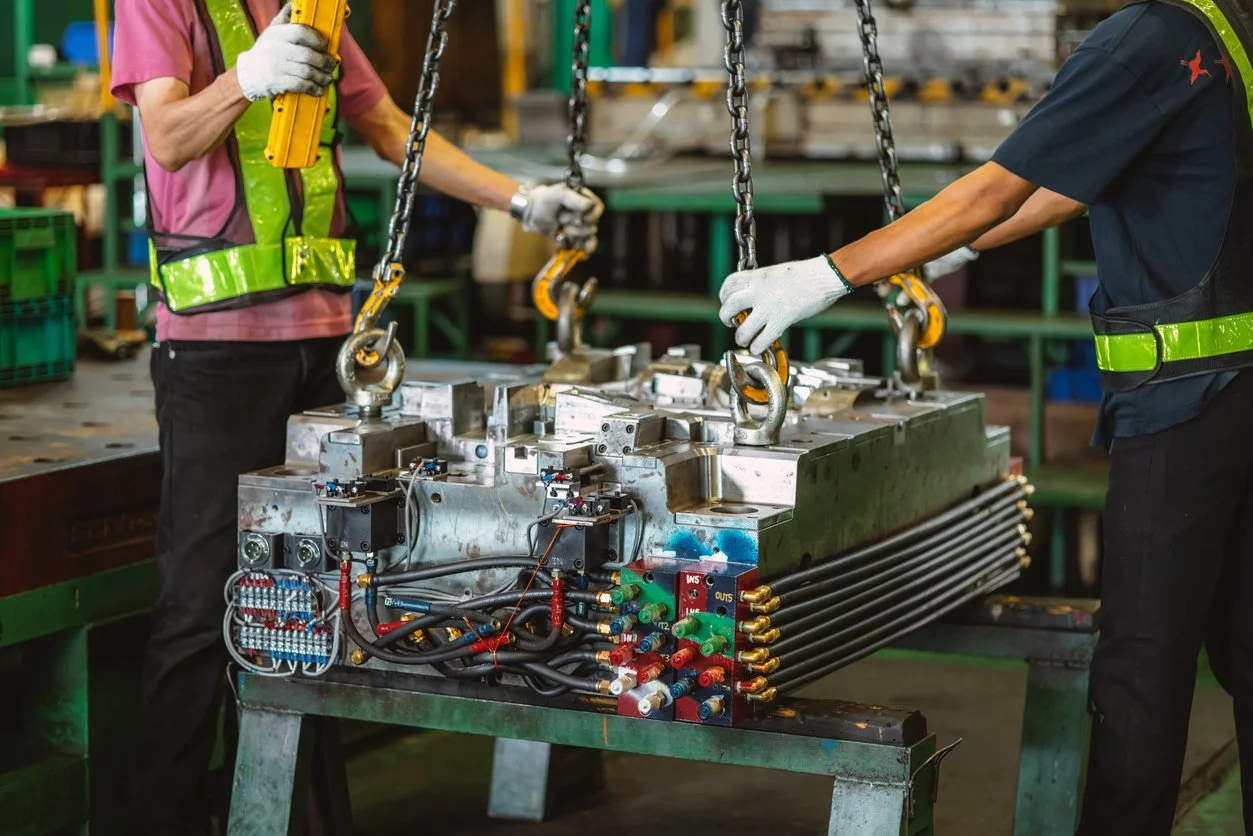
Maybe a crane or hoist fails while moving a heavy die into position. An employee accidentally drops a fixture during setup. A fire damages several customer-owned injection molds stored in your facility. Or a mechanical failure causes extensive damage to custom tooling during production. The immediate concern is getting the equipment repaired or replaced. But there's another important question: Whose insurance is responsible for the loss?
For manufacturers that regularly handle customer-owned tooling, the answer may be more complicated than expected.
Customer-Owned Tooling Creates a Unique Insurance Exposure
Many manufacturers invest heavily in equipment they own, including CNC machines, injection molding presses, and other production machinery. But the tools and dies used in those machines aren't always their property.
In plastic injection molding, for example, a customer may pay for the design and construction of a custom injection mold, then leave it at the manufacturer's facility for ongoing production. Precision machining and tool and die operations may involve similar arrangements, with customer-owned dies, fixtures, patterns, and specialized tooling kept on-site for months or years. While the customer retains ownership, your company has physical possession of the equipment and may have contractual responsibilities for its care.
That creates a potential liability exposure if the tooling is damaged, destroyed, or lost while under your control. And depending on how your insurance policy is written, your standard commercial property or liability coverage may not respond the way you expect.
Does General Liability Insurance Cover Damage to a Customer's Custom Tooling?
One of the most common misconceptions is that Commercial General Liability (CGL) insurance automatically covers damage to someone else's property. While General Liability insurance can cover certain claims involving third-party property damage, most CGL policies contain exclusions for property in the insured's care, custody, or control. For example, if a customer-owned injection mold is damaged while your employees are installing it, moving it, or using it in production, the care, custody, or control exclusion may affect whether the claim is covered.
The exact circumstances and policy language matter, but the important takeaway is that damage to property belonging to someone else isn't necessarily covered simply because your business carries General Liability insurance.
Commercial property insurance can present a similar problem. A policy that covers your building, machinery, and business personal property may not automatically provide adequate coverage for valuable tooling owned by customers. That's why manufacturers need to look beyond their standard insurance policies when evaluating this exposure.
What Is Bailee's Customer Coverage?
Bailee's Customer Coverage is designed to address certain risks involving property belonging to others while that property is in your business's possession, custody, or control. In manufacturing environments, this may include customer-owned injection molds, dies, fixtures, patterns, and other custom tooling entrusted to your facility.
Depending on the policy, coverage may respond to damage caused by events such as fire, theft, accidental handling damage, or other covered causes of loss. However, coverage terms vary, and exclusions may apply to damage caused by wear and tear, mechanical breakdown, defective workmanship, or the manufacturing process itself.
Another important consideration is whether coverage applies only when your business is legally liable for the damage or whether it can respond more broadly to covered physical losses involving customers' property. These distinctions can make a significant difference when a claim occurs. The goal is to make sure the coverage reflects the actual property your business handles and the risks associated with your operations.
How Much Customer-Owned Tooling Is in Your Facility?
One of the biggest challenges with customer-owned tooling is determining the total value of property your company is responsible for at any given time. A single injection mold may represent a substantial investment. Multiply that by dozens of customers and multiple production programs, and the combined value of customer-owned tooling can become significant.
Consider what would happen if a fire damaged an entire storage area containing custom tooling from several customers. Even if individual tools were insured, would your policy limits be sufficient to address the total loss? Manufacturers should regularly evaluate the value of customer-owned property in their possession, including tooling that is temporarily stored, awaiting maintenance, or not currently being used in production.
It's also important to understand whether the policy applies a limit to each item, each customer, or the total property involved in a single loss. A coverage limit that seemed reasonable when the policy was first purchased may no longer reflect the value of tooling currently in your facility.
What If Customer Tooling or Dies Are Damaged During Production?
Not every tooling loss happens because of a fire, theft, or an obvious accident. An injection mold or die could be damaged during installation, setup, maintenance, or normal production operations. Improper alignment, excessive pressure, a mechanical malfunction, or an employee error could result in costly repairs. These situations deserve particular attention because some insurance policies exclude damage arising from processing, workmanship, or the operation of machinery.
A policy that covers customer-owned property against fire or theft may not necessarily cover damage that occurs while the tooling is actively being used. Manufacturers should discuss these scenarios with their insurance agent and review how the policy addresses custom tooling during different stages of production.
What Happens When Damaged Tooling Interrupts Production?
The cost of repairing or replacing an injection mold or die may be only part of the financial impact. If the damaged tooling is essential to an automotive, medical device, or other manufacturing program, production could stop while repairs are completed or replacement tooling is manufactured.
That interruption can affect delivery schedules, customer relationships, and contractual obligations.
A customer may experience its own production delays and financial losses. Depending on the contract and circumstances, your company could face demands for reimbursement beyond the physical damage to the equipment. It's important to understand that Bailee's Customer Coverage does not automatically cover every financial consequence of damaged tooling. Lost production, contractual penalties, and other indirect losses may require different coverage considerations or may not be insurable under the available policy.
Reviewing both your insurance and your customer agreements can help clarify these responsibilities before a loss occurs.
What If Customer Tooling Is Sent to Another Facility?
Manufacturing operations frequently involve multiple facilities and outside service providers. An injection mold may be transported for repairs, sent to a specialty CNC machining company, or moved between production locations. Dies and other custom tooling may be sent to heat-treating facilities or outside contractors for additional work.
Once customer-owned tooling leaves your premises, additional questions arise:
Does your coverage follow the property during transportation?
Is it covered while temporarily stored at another facility?
What happens if the outside contractor damages it?
Bailee's Customer Coverage and Commercial Inland Marine insurance may provide options for these exposures, depending on the policy structure. The important point is that coverage should reflect where the tooling actually goes, not just where it's normally stored.
Your Customer Agreements Matter, Too
Insurance is only one part of managing the risks associated with customer-owned tooling.
Manufacturing agreements often address who owns the tooling, who is responsible for maintenance, and what happens if equipment is damaged or destroyed. Some contracts may require the manufacturer to insure customer-owned injection molds for their full replacement value. Others may establish specific responsibilities for damage occurring during production or storage.
Those contractual obligations should be reviewed alongside your insurance coverage. A contract that requires your business to assume responsibility for certain losses doesn't automatically mean your insurance policy will cover those obligations. Making sure your insurance and contractual responsibilities align is an important part of protecting your business.
Why a Commercial Insurance Risk Audit Matters
At Navisure Insurance Group, one of the most common issues we identify during commercial risk audits is missing coverage or endorsements for exposures that fall outside a business's standard insurance policies. For precision tool and die shops, CNC machining operators, and plastic injection molding companies, customer-owned tooling is a prime example.
A business may have substantial Commercial General Liability and property insurance limits but still lack appropriate protection for injection molds, dies, fixtures, and other equipment entrusted to its care. Our review goes beyond simply checking policy limits. We look at how a business actually operates, the property it handles, where that property is located, and whether its insurance reflects those exposures.
We also examine operational classifications, named insureds, and organizational structures that can create additional coverage complications. The objective is to identify potential problems before they become expensive claims.
Is Your Business Properly Insured for Customer-Owned Tooling?
Customer-owned injection molds, dies, and custom tooling are essential to many manufacturing operations. They're also valuable assets that can create significant financial exposure when something goes wrong. Whether your company handles a handful of customer-owned molds or manages tooling for dozens of production programs, it's worth asking whether your current insurance would respond to a loss.
Contact Navisure Insurance Group for a commercial insurance risk audit. Our team can review your existing policies, evaluate how customer-owned tooling is protected, and help identify coverage gaps that could leave your manufacturing business exposed. For a comprehensive review, please prepare to provide your current Commercial General Liability (CGL) policy, commercial property policy, a sample customer manufacturing agreement, and an estimated schedule of values for all customer-owned tooling currently in your care.
Don't wait until a customer's injection mold or die is damaged to find out who is responsible for paying the bill.

TROY VANDERMEER | VICE PRESIDENT
Troy attended Aquinas College in Grand Rapids, MI, and obtained a degree in Business and Technology. After graduating, he began his career as an insurance adjuster for a large-scale carrier. This included almost 10 years of experience, with roles such as property catastrophe, marine, and recreational vehicle claim handling. Troy learned the ins and outs of how insurance companies operate while also perfecting the technical aspects of the industry. This gives him an edge when working with clients regarding what coverage best fits their needs. As a proponent of leveraging technology, his goal is to simplify the process of getting insured without clients having to sacrifice their time.
In his spare time, Troy coaches high school soccer, enjoys golfing, fly fishing, and spending time with his family and friends.
Frequently Asked Questions about Business Liability
Q: Does General Liability insurance cover customer-owned injection molds or dies?
Not necessarily. Commercial General Liability policies commonly contain care, custody, or control exclusions that can limit coverage for damage to property entrusted to your business. The specific circumstances and policy language determine whether coverage applies.
Q: What is Bailee's Customer Coverage in manufacturing?
Bailee's Customer Coverage is designed to protect against certain losses involving customers' property while it's in a business's possession, custody, or control. For manufacturers, this may include injection molds, dies, fixtures, patterns, and other customer-owned tooling.
Q: Is customer-owned tooling covered under commercial property insurance?
Some commercial property policies include coverage for property of others, but limits and conditions may be insufficient for valuable customer-owned custom tooling. Additional coverage or endorsements may be needed.
Q: Does Bailee's Customer Coverage apply when an injection mold or die is damaged during production?
It depends on the policy. Certain forms exclude damage caused by processing, workmanship, or machinery operations. Manufacturers should confirm how their coverage responds when customer-owned tooling is actively being used.
Q: Is customer-owned tooling insured while being transported to another facility?
Coverage for customer-owned tooling doesn't always extend beyond your facility. If injection molds or dies are transported to outside contractors for repairs, heat treating, or other services, it's important to verify that they're protected during transit and while at the other location. Depending on the policy, this may require Bailee's Customer Coverage or specialized Commercial Inland Marine protection.
Q: How much Bailee's Customer Coverage does a manufacturer need?
Coverage needs depend on the total value of customer-owned property in the manufacturer's possession, contractual obligations, and the potential for multiple tools to be damaged in a single event. A commercial insurance risk audit can help determine appropriate limits.