
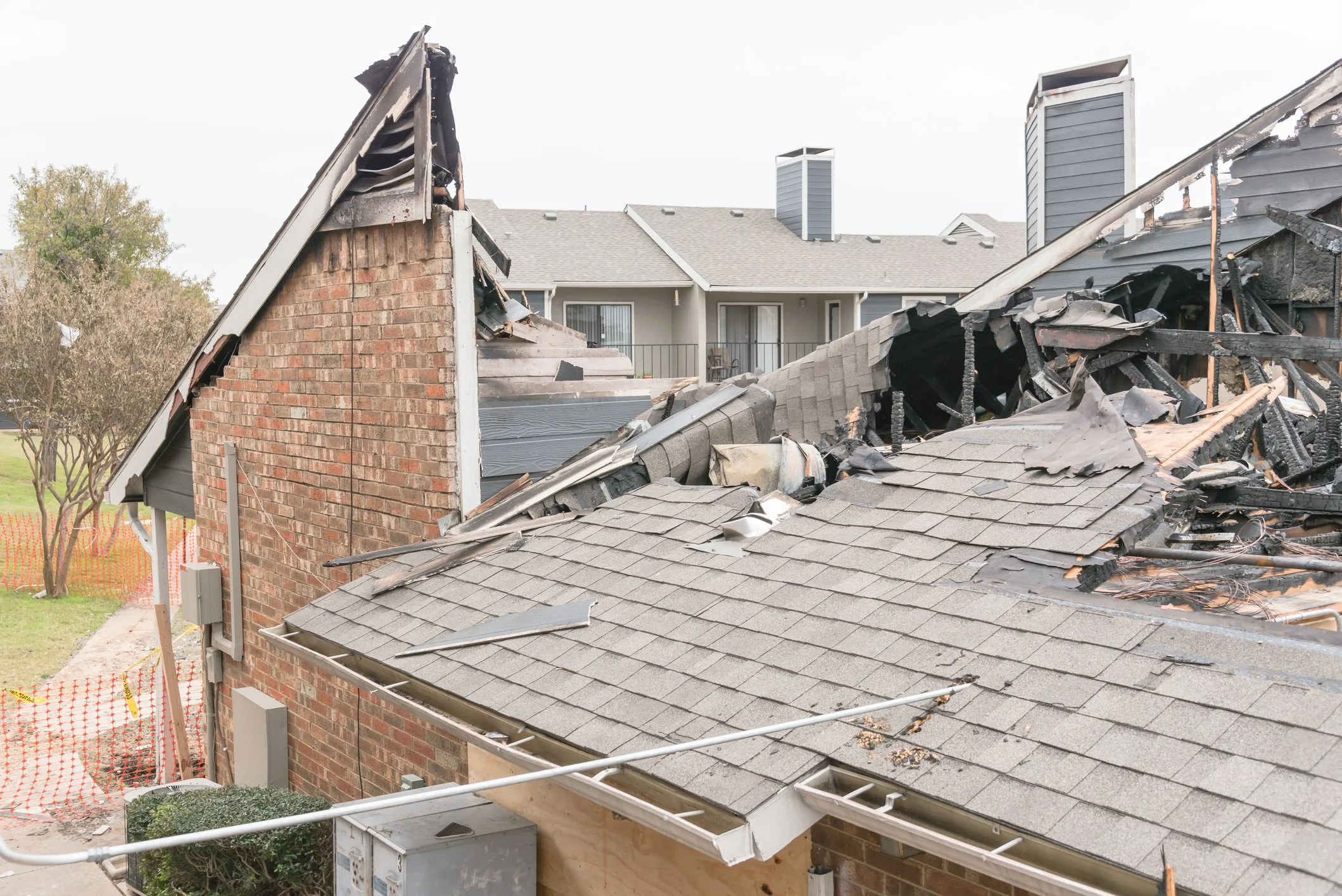
If you own a rental property, you’ve probably considered various possibilities for damage, including fire. If a fire were to damage several units in an apartment building you own, you’d assume that the fire department would respond, officials would assess the damage, and you would begin working with your insurance company to arrange repairs. Simple enough. Your commercial property insurance should help cover the damage, and you would expect to restore the building to its previous condition. This would be an unfortunate but manageable situation.
But what if during the permitting process, the local building department determines that certain repairs must comply with current building codes? That would change things. It might mean upgrading electrical systems, adding fire protection features, improving accessibility, or making other changes that weren't required when the building was originally constructed.
Suddenly, the cost of rebuilding is significantly higher than you expected. Your commercial property policy may cover the direct damage caused by the fire, but it might not cover all the additional expenses required to meet current building codes. For owners of apartment buildings and multi-family properties, this is an important coverage gap to understand before a major loss occurs.
Why Building Codes Can Complicate Property Insurance Claims
Many apartment buildings were constructed decades ago under building codes that have since changed. Older buildings may continue operating legally under requirements that applied when they were built, even though some of their systems or construction methods would not meet today's standards.
However, when a building suffers significant damage, repairs may trigger requirements under current building codes. Depending on the extent of the damage, the building's age, the type of work being performed, and local regulations, the owner may be required to make improvements beyond simply repairing what was damaged.
For example, a fire that damages part of an older apartment building could lead to additional requirements involving electrical systems, fire separation, accessibility, or other building components. These requirements vary by jurisdiction and project. Not every repair triggers a major code upgrade, but when additional work is required, the costs can be substantial.
That's where Ordinance or Law Coverage becomes important.
What Is Ordinance or Law Coverage?
Ordinance or Law Coverage is a commercial property insurance protection designed to address certain additional costs associated with enforcing building codes or ordinances following a covered loss.
A standard commercial property policy generally covers direct physical damage caused by a covered event, subject to its terms and conditions. However, it may exclude or limit costs associated with complying with building laws or ordinances.
For owners of older apartment buildings, that distinction matters. Replacing damaged materials may be covered, but the additional expense of bringing the property into compliance with current requirements may not be. Ordinance or Law Coverage can help address these exposures through three commonly identified coverage components: Coverage A, Coverage B, and Coverage C.
Coverage A: Loss to the Undamaged Portion of the Building
One of the more surprising situations a property owner can encounter is being required to demolish or replace part of a building that wasn't physically damaged. Suppose a fire destroys a substantial section of an older apartment building. Although the remaining portion is structurally intact, applicable building regulations require the entire structure to be demolished rather than allowing a partial reconstruction.
Without appropriate coverage, the property owner could face a significant uninsured loss involving the undamaged portion of the building. Ordinance or Law Coverage A addresses loss in value to the undamaged portion of a building when enforcement of an applicable ordinance or law requires its demolition following a covered loss.
The availability and extent of coverage depend on the policy wording and applicable requirements. Coverage A does not automatically mean every undamaged portion of a building will be covered simply because repairs are complicated or expensive. For multi-family property owners, understanding this protection is particularly important when insuring older buildings or properties with construction features that may not meet current standards.
Coverage B: Demolition Costs
If a building ordinance requires demolition of an undamaged portion of a property, the expense of tearing it down and removing the debris can create another significant financial burden. Demolition may involve specialized contractors, equipment, permits, and debris removal. The work can become more complicated when the building is occupied, located near other structures, or contains materials requiring special handling.
Ordinance or Law Coverage B is designed to address covered demolition expenses associated with the undamaged portion of a building that must be demolished because of an applicable ordinance or law. This coverage is distinct from the cost of replacing the building itself. Property owners should understand how demolition expenses are addressed under their policies and whether the available limits reflect the potential costs.
Coverage C: Increased Cost of Construction
For many apartment building owners, increased construction costs may be the most recognizable Ordinance or Law exposure. Consider an older multi-family building that suffers extensive damage from a covered fire. During reconstruction, the owner learns that certain building components must be upgraded to meet current code requirements.
Those improvements could involve electrical wiring, fire protection systems, accessibility features, or other construction changes required by the local authority. The original building may have been legally occupied before the fire, but rebuilding it to its previous specifications is no longer permitted.
Ordinance or Law Coverage C can help pay certain additional costs required to repair or reconstruct covered property in compliance with applicable building codes. However, this coverage is subject to policy limits, conditions, and exclusions. It generally does not provide unlimited funding for renovations or improvements that a property owner simply wants to make during reconstruction. The distinction is whether the additional expense is required by an applicable ordinance or law and falls within the policy's coverage provisions.
Why Older Apartment Buildings May Face Greater Exposure
Owners of older multi-family properties should pay particular attention to Ordinance or Law Coverage because building age and construction characteristics can influence the cost and complexity of repairs. A property built several decades ago may contain electrical systems, plumbing, structural features, or fire protection components that differ significantly from current construction standards.
While those features may be acceptable during normal occupancy, a substantial renovation or reconstruction project can trigger requirements that would not otherwise apply. The financial impact can be especially challenging for owners of larger apartment buildings, where even relatively modest upgrades across numerous units can add up quickly.
For example, an improvement that costs several thousand dollars per unit could become a significant expense when multiplied across a 20-, 40-, or 60-unit property. The specific upgrades required will depend on the building and the applicable regulations, but the potential for additional construction costs deserves consideration when evaluating property insurance.
Does Replacement Cost Insurance Cover Building Code Upgrades?
Another common misconception is that insuring an apartment building for replacement cost automatically covers everything required to rebuild it after a loss. Replacement Cost Coverage generally addresses the cost of repairing or replacing damaged property with materials of comparable kind and quality, subject to policy provisions.
But replacement cost and Ordinance or Law Coverage address different exposures. A building may be insured for its full estimated replacement cost and still lack sufficient protection for expenses associated with complying with current building codes. For example, the replacement cost valuation may account for rebuilding the existing structure, while additional code-required improvements create expenses beyond that estimate.
That's why owners should review both their building valuation and their Ordinance or Law limits. Having adequate property insurance is important, but it doesn't necessarily eliminate every potential coverage gap.
What Happens to Rental Income During Reconstruction?
When an apartment building suffers significant damage, the financial impact extends beyond construction costs. Tenants may need to relocate, units may become temporarily uninhabitable, and rental income may decline while repairs are underway. Business Income or Loss of Rents Coverage may help address qualifying income losses following covered property damage. However, rebuilding delays caused by building code requirements can introduce additional complications.
For example, if reconstruction takes longer because the owner must complete required code upgrades, the additional time may not automatically be covered under the standard business income provisions. Some policies offer Ordinance or Law-related time element coverage or endorsements that may address qualifying additional periods of income loss associated with code enforcement.
Property owners should review these provisions carefully, including waiting periods, restoration period limitations, and the relationship between their property coverage and loss-of-rents protection. A policy that adequately covers the physical reconstruction may still leave the owner facing significant financial pressure if rental income is interrupted longer than expected.
Are Your Ordinance or Law Coverage Limits Sufficient?
Even when an apartment building has Ordinance or Law Coverage, the available limits may not be adequate for a major loss. Some policies provide limited amounts of coverage automatically, while others require specific endorsements or separately selected limits. Coverage A, B, and C may also be structured differently, with distinct limits or shared limits depending on the policy.
For an older multi-family property, a relatively small allowance for demolition or increased construction costs may not be sufficient if a major fire or other covered event triggers extensive code requirements. Property owners should evaluate the age, size, construction, and condition of their buildings when considering appropriate coverage limits.
It's also worth reviewing coverage whenever a property is acquired, renovated, expanded, or substantially improved.
Why a Commercial Insurance Risk Audit Matters
At Navisure Insurance Group, missing coverage and endorsements are among the issues we frequently identify during commercial insurance risk audits. Ordinance or Law Coverage is particularly important for owners of large habitational and multi-family properties because standard commercial property insurance may not fully address the expenses associated with rebuilding under current codes.
Our review goes beyond checking the building's insured value. We evaluate how the property is insured, whether important endorsements are included, and whether coverage limits reflect the building's characteristics and potential exposures.
We also examine organizational structures, named insureds, and situations where a property is owned by one LLC but managed or operated by another. These arrangements can create additional complications when policies aren't structured correctly. The objective is to identify potential coverage gaps before a major property loss reveals them.
Is Your Apartment Building Protected Against Unexpected Rebuilding Costs?
A fire, severe storm, or other covered event can create enough disruption for a multi-family property owner. Discovering that your insurance doesn't adequately address required building code upgrades can make the situation even more difficult. Ordinance or Law Coverage can be an important part of protecting your investment, particularly if you own older apartment buildings or multiple properties with different construction characteristics.
Contact Navisure Insurance Group for a commercial insurance risk audit. Our team can review your existing property policies, evaluate Ordinance or Law Coverage and limits, and help identify potential gaps that could affect your ability to rebuild after a covered loss.
For a comprehensive review, please have your current commercial property insurance policy, building valuations, and any available information about recent renovations or major building system upgrades ready. Understanding how your insurance responds to building code requirements today can help you avoid unexpected expenses when it's time to rebuild.

COREY VANDERMEER | PRESIDENT
Corey started his insurance career in the claims department for a national carrier and learned the basics of insurance coverage and how it’s applied. From there he decided to take the jump into sales and joined an independent insurance agency. Here he learned how to build coverage around the needs of each individual and cater to every client. When Corey decided to start an insurance agency he did so with the intention of simplifying the process of getting insured. With a focus on technology and simplicity; his goal was to create an insurance agency that was different from those currently dominating the market place.
When he’s not working, Corey enjoys golfing, fly fishing and spending time with his wife and kids. Together they enjoy traveling to Northern Michigan and to his wife’s hometown of San Francisco.
Frequently Asked Questions About Ordinance or Law Coverage
Q: What is Ordinance or Law Coverage for apartment buildings?
Ordinance or Law Coverage is a commercial property insurance protection that can help address certain additional expenses caused by enforcing building codes following a covered loss. It may include coverage for the undamaged portion of a building, demolition expenses, and increased construction costs.
Q: What is the difference between Ordinance or Law Coverage A, B, and C?
Coverage A generally addresses loss to the undamaged portion of a building when demolition is required by an applicable ordinance or law. Coverage B addresses qualifying demolition costs for undamaged portions. Coverage C addresses certain increased construction costs required to comply with applicable building codes.
Q: Does commercial property insurance automatically cover building code upgrades?
Not necessarily. Standard commercial property policies may exclude or limit expenses associated with enforcing building ordinances or laws. Additional coverage or endorsements may be necessary.
Q: Does replacement cost insurance include Ordinance or Law Coverage?
Replacement Cost Coverage and Ordinance or Law Coverage serve different purposes. Insuring a building for replacement cost does not automatically mean additional expenses required by current building codes are fully covered.
Q: Is Ordinance or Law Coverage important for older apartment buildings?
Yes. Older buildings may have construction features or systems that differ from current building standards. A significant covered loss could trigger code requirements that increase rebuilding costs, making it important to evaluate available coverage.
Q: Does Ordinance or Law Coverage pay for lost rental income?
The standard property-related Ordinance or Law coverages do not automatically cover lost rental income. Business Income or Loss of Rents Coverage, potentially supplemented by an appropriate Ordinance or Law time element endorsement, may address qualifying income losses and additional reconstruction delays, depending on policy terms.
Q: How much Ordinance or Law Coverage does an apartment building need?
Appropriate limits depend on factors such as the building's age, construction, replacement cost, applicable building requirements, and potential demolition or reconstruction expenses. A commercial insurance risk audit can help evaluate whether existing limits are appropriate.